Cortisol imbalances have become one of the most persistent challenges for individuals experiencing stress, disrupted sleep, mood fluctuations, hormonal irregularities, or stubborn fatigue.
As awareness grows, so does interest in nutrients that can help support healthy cortisol patterns - especially phosphatidylserine, one of the most clinically studied supplements for stress resilience, cognitive function, and HPA axis balance.
The connection between phosphatidylserine and cortisol is backed by published clinical research spanning several decades, showing promising results for individuals who experience elevated cortisol levels due to chronic stress.
Does phosphatidylserine help with cortisol?
Yes. Phosphatidylserine is a phospholipid that directly modulates the HPA axis, the body's cortisol-regulating system.
Clinical studies at doses of 300 to 800 mg per day show it can significantly reduce cortisol spikes during psychological and physical stress, making it one of the few nutrients with well-documented, direct effects on cortisol output.
What Is Phosphatidylserine?
Phosphatidylserine is a naturally occurring phospholipid found in high concentrations in brain cell membranes. These membranes are responsible for communication between neurons, nutrient exchange, and healthy cognitive functioning.
Without sufficient phosphatidylserine, nerve cells struggle to relay messages efficiently, which can lead to slower thinking, forgetfulness, and reduced stress tolerance.
The body does produce phosphatidylserine, but production declines with age and becomes further strained by ongoing stress, nutrient deficiencies, or hormonal imbalances.
A reduction in phosphatidylserine levels can contribute to symptoms such as:
- Brain fog
- Poor memory
- Difficulty concentrating
- Mood imbalances
- Slower cognitive processing
Supplementation helps replenish these levels, supporting brain health while simultaneously improving how the nervous system and endocrine system respond to stress.
The Science Behind Cortisol: How This Stress Hormone Works

To understand why the phosphatidylserine-cortisol relationship matters, it helps to look at cortisol’s role in the body.
Cortisol is produced by the adrenal glands and is essential for:
- Regulating energy
- Managing the sleep-wake cycle
- Supporting the immune response
- Handling acute stress
- Maintaining stable blood sugar
Although cortisol is necessary for survival, problems arise when cortisol remains elevated for long periods.
Chronic stress forces the body into a constant state of alertness, disrupting the circadian rhythm and exhausting the nervous system. Common signs of cortisol dysregulation include:
- Trouble falling asleep or staying asleep
- Waking up fatigued despite a full night’s rest
- Weight gain, especially around the midsection
- Irritability or mood swings
- Hormonal irregularities
- Cravings and emotional eating
- Difficulty focusing
- Afternoon crashes
Women, in particular, often experience more pronounced effects because cortisol directly interacts with estrogen, progesterone, and insulin - creating a ripple effect across the entire hormonal ecosystem.
Why Phosphatidylserine Has Become a Leading Cortisol-Support Supplement
Phosphatidylserine has quickly risen to prominence because it directly supports areas of the body most affected by ongoing stress: the brain, adrenal system, and hormone-regulating pathways.
Unlike many supplements that provide general calming benefits, phosphatidylserine has clinical evidence for cortisol reduction during stressful situations, making it uniquely effective for targeted stress support.
It also stands out because of its wide range of secondary benefits.
While many people take phosphatidylserine for cortisol regulation, others rely on it for sharper memory, clearer thinking, better focus, or deeper sleep - qualities that often decline when cortisol remains elevated for too long.
The combination of stress modulation, cognitive enhancement, and hormonal support has made phosphatidylserine a core ingredient in advanced cortisol-support formulas, including Harmonia.
How Phosphatidylserine Impacts Cortisol Levels
One of the primary reasons phosphatidylserine is valued is its measurable effect on the HPA axis - the system responsible for regulating the body's response to stress.
When the HPA axis becomes overstimulated, cortisol production increases more frequently and more intensely than necessary.
Phosphatidylserine helps by:
- Reducing excessive cortisol spikes in response to stress
- Calming overactive stress pathways, improving emotional balance
- Supporting a healthy cortisol rhythm, especially in the evening
- Improving stress tolerance, allowing the body to recover more quickly
Published research on HPA axis modulation suggests that phosphatidylserine may help maintain a smoother cortisol curve throughout the day, minimizing cortisol elevations that interfere with sleep, mood, and metabolic function.
People often report feeling more centered, less reactive, and more mentally composed when taking phosphatidylserine consistently - benefits that reflect healthier cortisol regulation.
Key Phosphatidylserine Benefits Beyond Cortisol Regulation
While phosphatidylserine cortisol support is one of its most notable strengths, phosphatidylserine benefits extend far beyond stress modulation.
1. Enhanced Cognitive Performance

Because the brain naturally contains high concentrations of phosphatidylserine, supplementation helps support:
- Working memory
- Learning speed
- Mental processing
- Focus during demanding tasks
- Clarity and multitasking ability
This makes phosphatidylserine especially valuable for those who struggle with brain fog or cognitive fatigue related to stress or hormone imbalances.
2. Improved Mood and Emotional Stability
Healthy cortisol patterns support emotional resilience. By balancing cortisol, phosphatidylserine indirectly supports mood regulation and stress tolerance.
3. Hormonal Balance Support
Since cortisol affects estrogen and progesterone, stabilizing cortisol helps create a more optimal environment for hormonal balance. This is particularly important for women experiencing hormonal imbalance symptoms, PMS, PCOS, or perimenopausal symptoms.
4. Better Sleep Quality
Phosphatidylserine can help lower nighttime cortisol, allowing the body to enter deeper, more restorative sleep. Many users begin to notice:
- Faster sleep onset
- Fewer nighttime awakenings
- Reduced restlessness
- More refreshed mornings
These benefits contribute to improved energy and mood throughout the day.
How Phosphatidylserine Compares to Other Cortisol-Support Ingredients
Several ingredients support stress resilience, but phosphatidylserine stands out for its unique mechanism and clinically observed effects.
These comparisons illustrate why phosphatidylserine remains a core ingredient within multi-targeted cortisol-support blends.
Phosphatidylserine for Sleep: Why Lower Nighttime Cortisol Matters
Cortisol follows a natural circadian pattern - high in the morning, gradually tapering off in the evening. This rhythm helps wake the body up, sustain daytime energy, and prepare for sleep at night.
When cortisol stays elevated in the evening, several problems arise:
- Difficulty falling asleep
- Waking up at 2–3 AM with a racing mind
- Restlessness or light sleep
- Poor recovery and daytime fatigue
Phosphatidylserine helps encourage a healthier evening cortisol decline, making it easier to experience restorative sleep.
Some individuals also experience an early cortisol surge between 3 and 5 AM that causes abrupt waking or a racing mind. This can reflect an exaggerated cortisol awakening response driven by chronic stress.
Research suggests taking phosphatidylserine in the late afternoon or with dinner may help moderate this pattern by reducing the cortisol accumulation at night that sets the stage for early waking.
Many users also note better mood, improved energy, and enhanced focus the next day, since sleep quality underpins almost every aspect of well-being.
Safety, Side Effects, and Who Should Avoid Phosphatidylserine
Phosphatidylserine is generally well-tolerated and considered safe for long-term use. Reported side effects are uncommon and tend to occur only at higher doses.
Possible mild effects may include:
- Digestive discomfort
- Headaches
- Light sleepiness if taken during the day
Individuals who should take caution include:
- Those on certain medications (who should consult a healthcare professional)
- Pregnant or breastfeeding women (always consult a doctor first)
While phosphatidylserine offers science-backed benefits, supplements should not replace personal medical advice.
How to Choose a High-Quality Phosphatidylserine Supplement
Not all phosphatidylserine supplements offer the same effectiveness. Look for:
- Clinically studied forms of phosphatidylserine
- Dosage that matches clinical research: Most studies showing cortisol benefits used 300 to 800 mg per day. For general stress and sleep support, 300 to 400 mg is a common starting point. For exercise-induced cortisol blunting, clinical trials have used 600 to 800 mg. Taking phosphatidylserine with food, particularly at your evening meal, supports its cortisol-lowering effect during the hours when cortisol should naturally be declining.
- Clean formulas free of unnecessary fillers
- Synergistic ingredients that enhance cortisol regulation and emotional balance
- High manufacturing standards and transparent labeling
What Foods Are High in Phosphatidylserine?
The body cannot produce adequate phosphatidylserine on its own, making dietary sources and supplementation important. Foods with the highest natural concentrations include:
- Organ meats (beef liver, kidney): the richest dietary source, with beef liver providing approximately 713 mg per 100g
- Fatty fish (mackerel, herring, salmon): approximately 480-550 mg per 100g
- Egg yolks: a practical everyday source that also provides choline and brain-supportive fats
- White beans and soy products: the best plant-based options
The important caveat: typical food portions provide far less phosphatidylserine than the 300 to 800 mg doses used in clinical cortisol research. Supplementation is generally required to reach amounts shown to meaningfully influence cortisol and cognitive function.
How Harmonia Incorporates Phosphatidylserine Into a Complete Cortisol-Support System

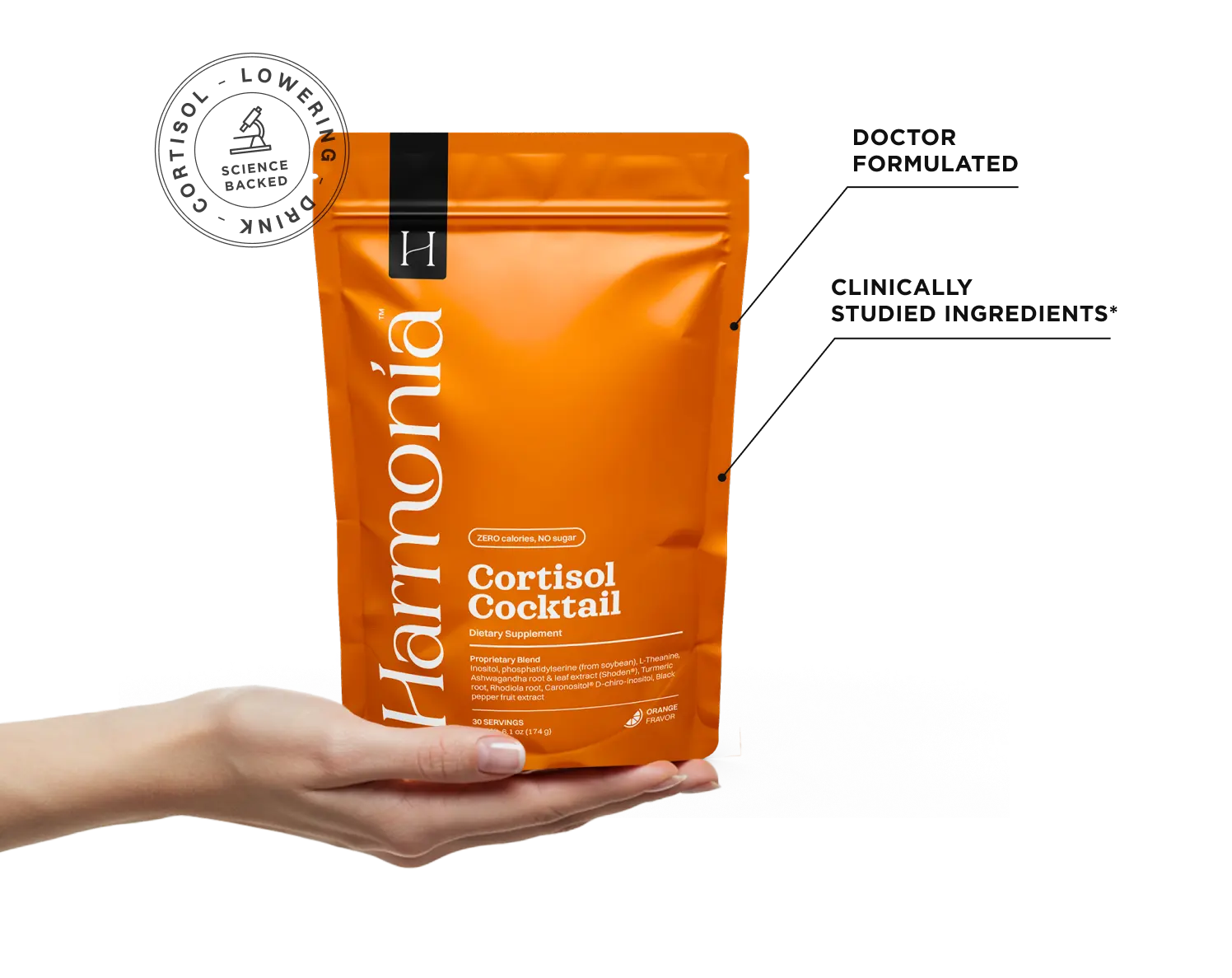
Harmonia includes phosphatidylserine as a foundational ingredient because of its proven ability to support healthy cortisol patterns, sharpen mental clarity, and promote calmer emotional responses.
But what makes Harmonia especially effective is the synergy created by combining phosphatidylserine with other clinically supported ingredients, including:
- L-Theanine for calm focus
- Ashwagandha for mood and stress resilience
- Myo-Inositol + D-Chiro Inositol for hormonal and metabolic balance
- Rhodiola for energy and emotional stability
- Turmeric + black pepper for inflammation and metabolic support
- Vitamins and minerals essential for adrenal function and nervous system health
This multidimensional formula addresses not just cortisol, but the entire ecosystem of stress, hormones, metabolism, mood, and sleep.
Conclusion
The connection between phosphatidylserine and cortisol is well-established, making this nutrient one of the most trusted tools for supporting healthy stress responses.
Beyond cortisol modulation, phosphatidylserine benefits include sharper thinking, improved mood, steadier energy, and deeper sleep - qualities that often decline when stress is high.
Harmonia integrates phosphatidylserine into a complete formula designed to support not only cortisol regulation, but the broader network of hormones, metabolism, and emotional well-being.
The result is a comprehensive, research-backed approach to helping individuals feel balanced, calm, and energized again.
If you're curious whether cortisol imbalance may be contributing to your symptoms, you can take Harmonia’s personalized quiz to better understand your stress patterns and receive recommendations tailored to your needs.
Frequently Asked Questions
Which is better, ashwagandha or phosphatidylserine?
They work through different mechanisms and suit different stress profiles. Phosphatidylserine directly modulates the HPA axis and is particularly effective for cortisol modulation, cognitive performance, and evening sleep quality. Ashwagandha is a broader adaptogen better suited for daytime stress resilience. Used together, they complement each other well: Ashwagandha in the morning, phosphatidylserine in the evening or with meals.
Can I take phosphatidylserine daily?
Yes. Phosphatidylserine is safe for daily long-term use at standard doses of 300 to 400 mg per day. Clinical studies lasting up to several weeks have found consistent benefits without significant adverse effects. Some individuals experience mild digestive discomfort at doses above 600 mg, which typically resolves when taken with food.
Can I take phosphatidylserine with magnesium?
Yes, and they work well together. Phosphatidylserine modulates cortisol at the HPA axis level, while magnesium supports adrenal function and calms the nervous system through separate pathways. There are no known negative interactions between them. Together they address both the upstream cortisol signal and the downstream physiological stress response, making them a complementary pairing for sleep and stress support.
References
- Hellhammer, J., Fries, E., Buss, C., Engert, V., Tuch, A., Rutenberg, D., & Hellhammer, D. (2004). Effects of soy lecithin phosphatidic acid and phosphatidylserine complex (PAS) on the endocrine and psychological responses to mental stress. Stress, 7(2), 119-126. Link.
- Hellhammer, J., Vogt, D., Franz, N., Freitas, U., & Rutenberg, D. (2014). A soy-based phosphatidylserine/phosphatidic acid complex (PAS) normalizes the stress reactivity of hypothalamus-pituitary-adrenal-axis in chronically stressed male subjects: a randomized, placebo-controlled study. Lipids in health and disease, 13(1), 121. Link.
- Komori, T. (2015). The effects of phosphatidylserine and omega-3 fatty acid-containing supplement on late life depression. Mental Illness, 7(1), 7-11. Link.